
Monday Memo 1258: An Engraved Invitation
 A common question people ask me is, "How can I know God's will?" They ask it because they sincerely want to know so they can obey Him. After all, if God has a purpose for your life, then it only makes sense that He would want you to know what it is. Otherwise, how could you fulfill it?
The problem is that some people expect God's guidance to come with absolute certainty. They want a detailed roadmap, multiple confirmations, and a guarantee that every decision will work out perfectly before they take the first step. They want an engraved invitation from heaven. Yet that’s rarely how God works.
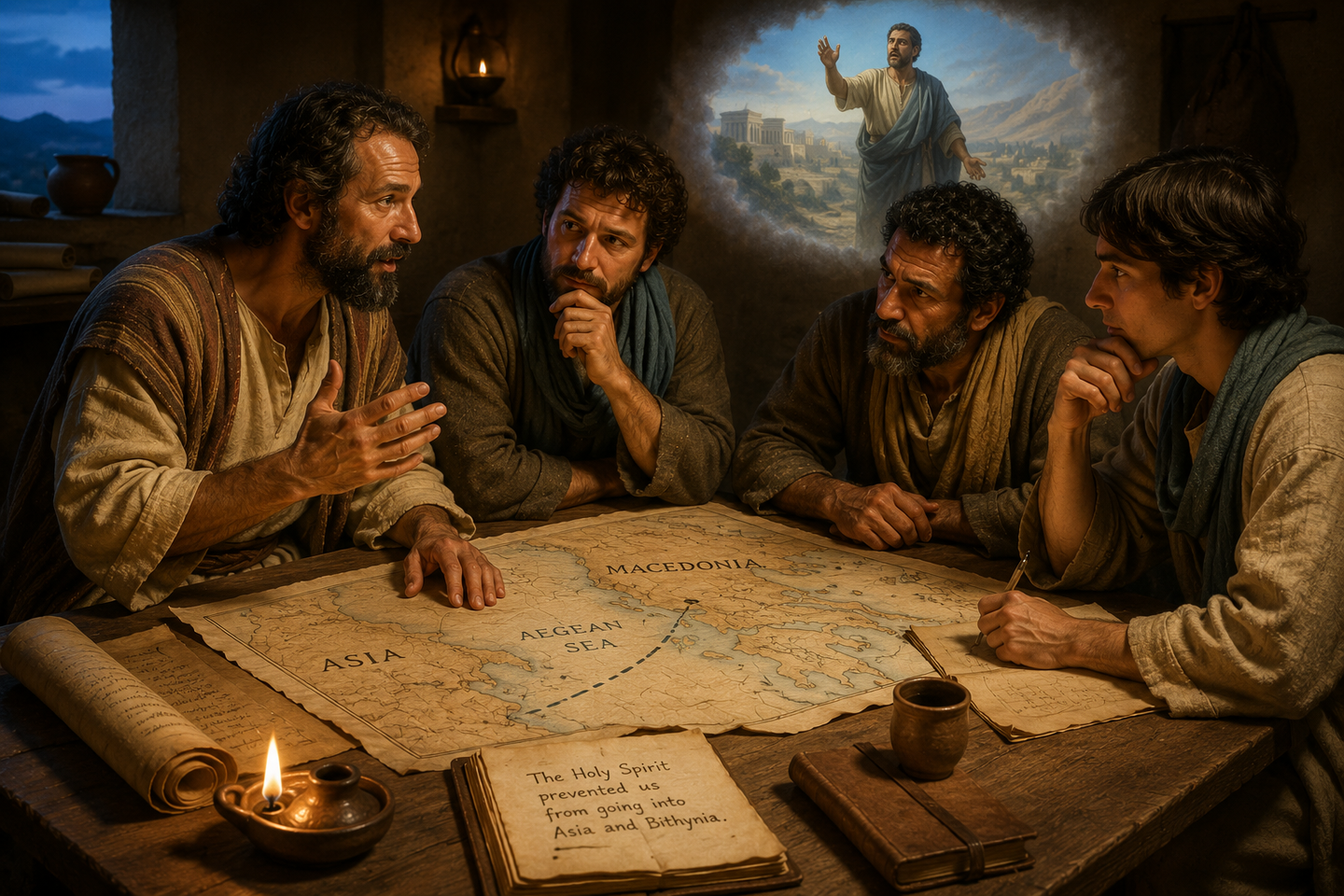
Paul's experience in Acts 16 offers a different perspective. He and his team were actively ministering and attempting to determine where they should go next. They tried to enter certain regions, but the Holy Spirit prevented them. Then Paul had a vision during the night of a man from Macedonia pleading, "Come over to Macedonia and help us."
What happened next is fascinating. Luke didn’t write that God spoke audibly or that Paul received a detailed strategy for Europe. Instead, he wrote:
"After Paul had seen the vision, we got ready at once to leave for Macedonia, concluding that God had called us to preach the gospel to them" (Acts 16:10).
That word concluding is for me the most important word in the story.
Paul and his companions considered the evidence before them. They looked at the closed doors, reflected on the vision, discussed it together, and reached a conclusion. Then they acted. Paul didn’t know everything, but he knew enough. That’s often how purpose works. God rarely reveals the entire journey. More often, He provides enough information for the next step. As Solomon wrote:
"In their hearts humans plan their course, but the Lord establishes their steps" (Proverbs 16:9).
Notice the partnership. We plan; God directs. We think; God guides. We move; God adjusts.
Some believers act as if planning demonstrates a lack of faith, but Scripture teaches the opposite. God expects us to use the minds He gave us. He expects us to evaluate opportunities, seek counsel, pray, observe circumstances, and make decisions. Then, as we move, He directs our steps. Another verse says:
"Trust in the Lord with all your heart and lean not on your own understanding; in all your ways submit to him, and he will make your paths straight" (Proverbs 3:5-6).
Notice that God didn’t tell us to stop thinking. He told us not to rely exclusively on our own understanding. There’s a difference. Faith doesn’t eliminate reasoning; it places reasoning under God's authority.
I’ve discovered that many people delay purpose, or the expression of it, because they’re waiting for God to remove every uncertainty. They want that engraved invitation from heaven. They want God to tell them exactly what to do, when to do it, how to do it, and what the outcome will be—believing that represents the epitome of spirituality. Yet your creative purpose rarely unfolds that way.
When I moved into purpose coaching, international ministry, and publishing, I never received a detailed blueprint. I saw opportunities, recognized patterns, sensed God's leading, and reached conclusions. For my books, I've had ideas but very few prompts from the Lord that said, “Write this book.” Some of my most Spirit-led moments became clear only after I acted and then realized, like Jacob, that “the Lord was in this place and I knew it not.”
Abraham experienced something similar. God told him to leave his country but didn't immediately reveal every detail of his destination. Moses led Israel without knowing every challenge ahead. Nehemiah felt compelled to rebuild Jerusalem before he had all the answers. Throughout Scripture, God's people often moved forward with partial information and complete trust.
The danger isn’t making a wrong decision. The greater danger is refusing to make any decision at all. Some people become stuck in perpetual preparation because they’re afraid of making a mistake. Could you make a mistake? Of course. Paul was human and so are you. We have partial knowledge and see through a glass darkly. Yet God is fully capable of redirecting sincere people who are trying to obey Him. What He cannot direct is a person who refuses to move.
Purpose requires faith, but faith isn’t passive. Faith thinks, evaluates, concludes, and acts. The Macedonian vision didn’t provide Paul with certainty. It provided enough information for the next step. The rest unfolded as he moved forward.
Perhaps that's exactly where you are today. Maybe you don’t have all the answers. Maybe you wish God would make His will clearer. If so, ask yourself a different question. Do you already have enough information to take the next step?
If the answer is yes, then perhaps it's time to do what Paul did. Conclude—and move.
Your Turn
What decision have you been delaying because you are waiting for more certainty? What information has God already provided that may be enough for your next step?
What Would Paul Ask You?
What conclusion have you already reached that you are afraid to act on?
Purpose Moment
Thank God for the guidance He has already provided. Ask Him for wisdom to interpret the information before you, courage to make a decision, and faith to trust Him with the outcome. Then take the next step you know to take.