
Monday Memo 1269: Make What You Have Available
 In the last lesson, we looked at the importance of being accessible to people if we're going to fulfill our purpose. Yet there's another dimension to accessibility that we shouldn't overlook. It's not enough to make ourselves available. We also need to make what God has given us available so He can use it however and wherever He chooses.
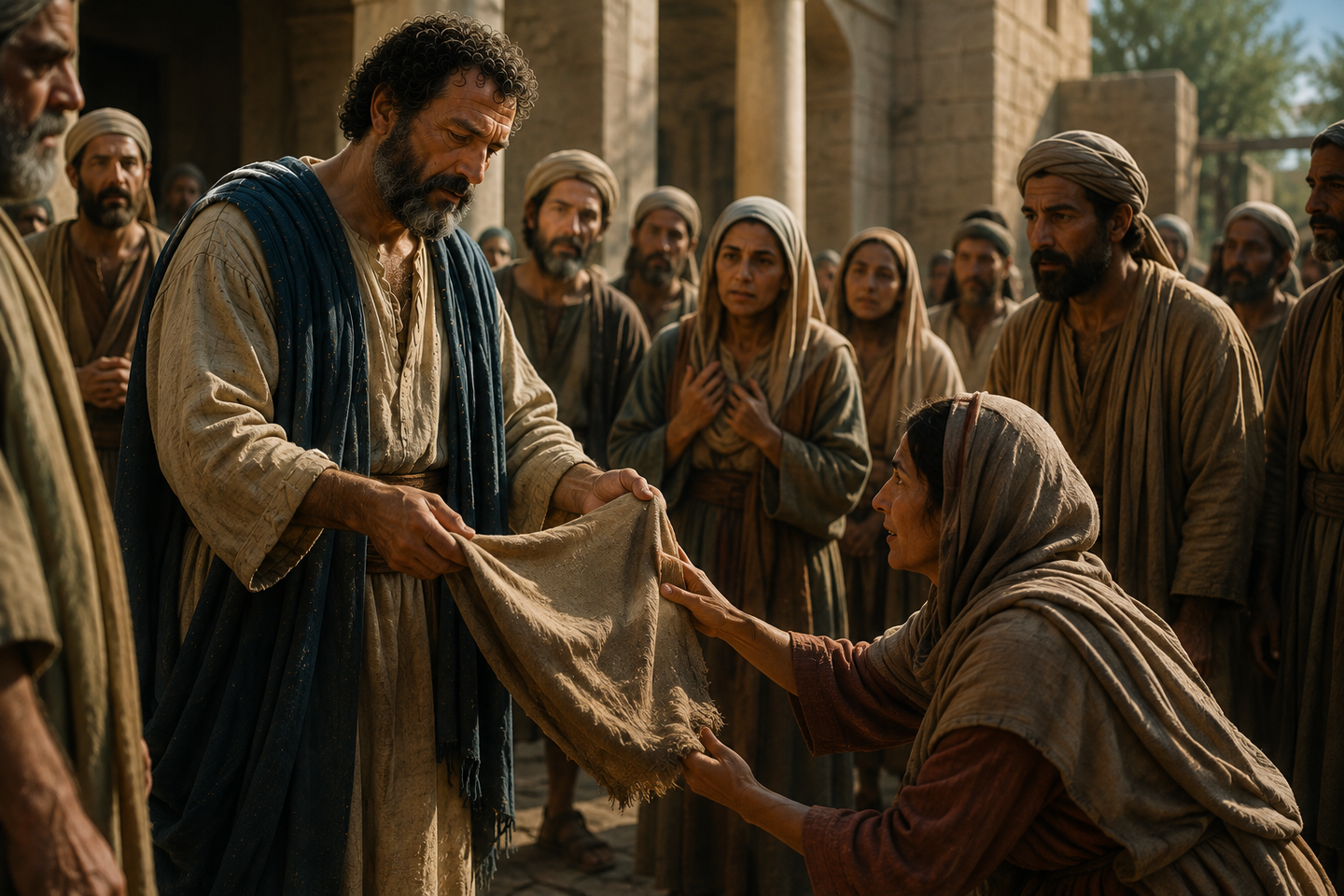
There's a fascinating story in Acts 19 that illustrates this principle. While Paul was in Ephesus, Luke tells us, “God did extraordinary miracles through Paul, so that even handkerchiefs and aprons that had touched him were taken to the sick, and their illnesses were cured and the evil spirits left them” (Acts 19:11-12). Apparently, even something as ordinary as Paul's work apron became useful in God's hands.
I don't think the lesson is that we should start sending people aprons or handkerchiefs. The lesson is that God wasn't limited by conventional means, and Paul apparently wasn't protective of what belonged to him when it could help someone else. Paul didn't have to be physically present for God to use something connected to his life and work. If an apron could be useful, then the apron was available.
I've tried to adopt that same attitude toward what God has entrusted to me. I've prayed, “Lord, if I have anything within my world—words, writing, ideas, insights, resources—then You are free to take and use them for Your purpose.” I don't want to be so protective of what I have produced or accumulated that I prevent God from using it to benefit someone else. If He gave it to me in the first place, then He certainly has the right to determine how far it travels and whom it reaches.
Paul practiced that principle throughout his ministry, especially through his writing. He used the technology and infrastructure available in his day to extend his purpose beyond his physical presence. He had pen and ink, papyrus, couriers, Roman roads, and ships that traveled throughout the Empire. When Paul couldn't be somewhere personally, his words could go where he couldn't.
In fact, Paul instructed the Colossians, “After this letter has been read to you, see that it is also read in the church of the Laodiceans” (Colossians 4:16). In other words, Paul wanted his material shared. He wasn't trying to restrict access to what he had written. He understood that once God had given him something useful, it needed to circulate.
We have opportunities today that Paul couldn't possibly have imagined. We have websites, email, social media, podcasts, video, Zoom, digital books, online courses, and instant communication with people almost anywhere in the world. Those things aren't our purpose any more than papyrus was Paul's purpose. They are simply tools that allow our purpose to travel farther than we can.
I've tried to use social media that way. I don't see it simply as a place to post pictures, express opinions, or tell people what I'm doing. I see it as another way to make what God has given me accessible. I can write something in my home, post it online, and within minutes someone thousands of miles away can read it. I may never know who reads it, forwards it, shares it, translates it, or comes across it years later, but I can make it available and trust God with the results.
Paul understood that principle long before social media existed. He didn't know that believers would still be reading his letters two thousand years after he wrote them. He was simply faithful to write what God had given him and then release it. He couldn't determine how far those words would travel, but he could make sure they were available to travel.
That's an important creativity lesson. Some people have decades of wisdom, stories, sermons, photographs, research, songs, poems, ideas, or insights stored away where no one can benefit from them. They may think what they have isn't important enough to share, or they may be waiting until they can produce it perfectly. Meanwhile, something God could use remains inaccessible.
You don't have to know how God will use what you create before you release it. Paul couldn't possibly have understood the eventual impact of every letter he wrote. Your responsibility is to create what is in your heart, make it as good as you can, and then make it accessible. God can determine its reach.
This became even more important when Paul was imprisoned. His movements could be restricted, but his words could still travel. He wrote to Timothy, “I am suffering even to the point of being chained like a criminal. But God's word is not chained” (2 Timothy 2:9). Paul understood that his physical limitations didn't have to become limitations on his message.
That's still true today. You may not be able to travel everywhere your purpose needs to go, but perhaps your writing can. Your voice can travel through a podcast. Your teaching can travel through a video. Your ideas can travel through a book or social media post. Your experience can be shared with someone you've never met. Technology allows something God has given you to go places you may never personally visit.
Don't confuse the technology with your purpose, but don't ignore technology that can extend the reach of your purpose. Paul used what was available to him, whether it was an apron, a letter, a courier, a Roman road, or a ship. We should be just as creative and generous with the tools available to us.
If God has given you something that can help others, make it available. Don't decide in advance that it isn't significant enough, polished enough, or important enough to matter. Put what you have into God's hands and let Him decide what He wants to do with it. If He could use Paul's work apron and handwritten letters to touch people far beyond Paul's physical reach, He can certainly use what you have as well.
Your Turn
What do you have in your world—words, ideas, experiences, resources, teaching, creativity, or wisdom—that could benefit others if you made it more accessible? What technology or tool could you use to extend the reach of your purpose?
What Would Paul Ask You?
What has God given you that you're still holding onto when you should be making it available for others to use?
Purpose Moment
Tell the Lord, “If I have anything within my world—words, writing, ideas, insights, or resources—You are free to take and use them for Your purpose.” Then identify something you already have that you can share, publish, post, teach, or release so God can use it beyond your immediate reach.