
Monday Memo 1272: They Came to Her
Huldah — 2 Kings 22:11-20; 2 Chronicles 34:19-28
 Over the years, I've come to understand that one of the reasons God gave me the purpose message was to help women discover and become comfortable with who He created them to be. That doesn't mean the principles of purpose are only for women, for they apply to everyone. Yet there's something significant about studying the women of Scripture and seeing how often God used them, despite a male-dominated culture, in ways that challenged the prevailing attitudes and expectations of their day.
Huldah is one of those women, and her story illustrates something I have taught for years: You don't have to go looking for your purpose. Your purpose will come looking for you. Your responsibility is to get comfortable with who you are, develop what God has given you, and then pay attention to the people and situations that seek you out because they need what you have.
THE DISCOVERY
During King Josiah's reign, workers were repairing the Temple when Hilkiah the high priest discovered the Book of the Law. When the book was read to Josiah, he immediately realized how far the nation had departed from what God required:
When the king heard the words of the Book of the Law, he tore his robes. He gave these orders to Hilkiah the priest, Ahikam son of Shaphan, Akbor son of Micaiah, Shaphan the secretary and Asaiah the king’s attendant: “Go and inquire of the Lord for me and for the people and for all Judah about what is written in this book that has been found” (2 Kings 22:11-13).
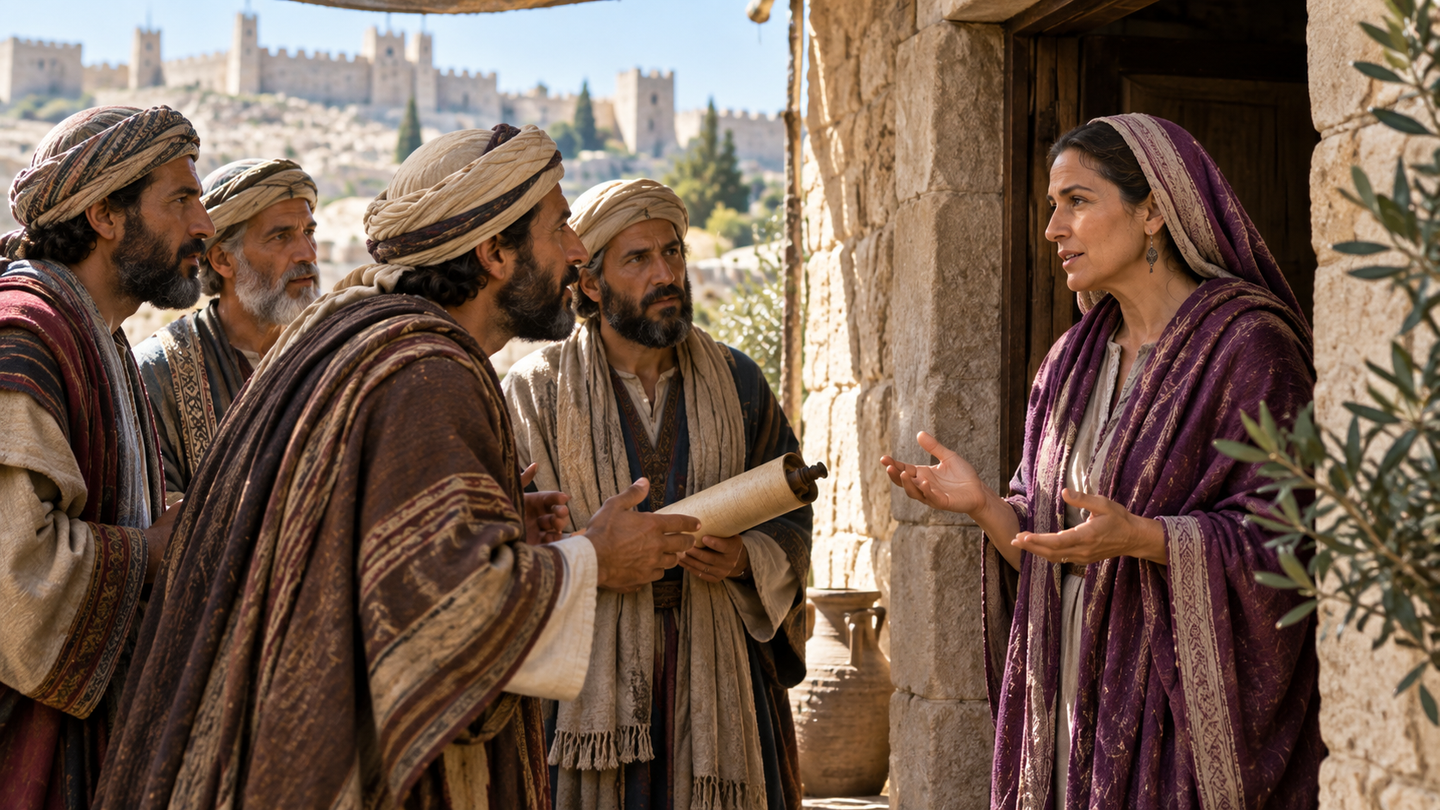
This was a national crisis, and the king needed to hear from God. He didn't need someone's opinion or a committee to study the matter. He wanted someone who could help him understand what God was saying and what they were supposed to do, and his representatives knew exactly where to go. They went to Huldah.
THEY KNEW WHERE TO GO
Scripture tells us, “Hilkiah the priest, Ahikam, Akbor, Shaphan and Asaiah went to speak to the prophet Huldah” (2 Kings 22:14). I love that verse because there doesn't seem to have been any debate about whether they should consult a woman. The king needed a word from God, and his representatives knew where to go and get one.
We aren't told that Huldah had an office in the Temple or some official position in the royal court. In fact, the text simply tells us that she lived in Jerusalem and identifies her husband, Shallum. Yet when the need arose, these important men came looking for her because she had something they needed.
That's how purpose often works. People ask me, “Now that I know my purpose, what should I do?” My answer is often, “Nothing.” By that I don't mean you should be lazy, passive, or fail to develop your gifts. I mean you don't have to manufacture opportunities or run around trying to convince people that you have something important to offer. Instead, get comfortable with who you are and pay attention to what is already happening around you. Look for opportunities and seize them when they show themselves.
Who seeks you out? What kinds of problems do people regularly bring to you? What group of people seems to find you wherever you go? What opportunities keep appearing that require something you naturally do well? Those things can provide important clues to your purpose because your purpose has a way of coming to find you.
COMFORTABLE WITH WHO SHE WAS
When the delegation arrived, Huldah didn't seem intimidated by the importance of her visitors. She didn't protest that surely they could find someone more qualified, nor did she apologize for being a woman or suggest they consult a man before taking her seriously. She simply gave them what she had, saying, “This is what the Lord, the God of Israel, says” (2 Kings 22:15), and then she delivered God's message.
She was comfortable functioning according to who she was, and apparently everyone else was comfortable with it as well because they had come specifically to hear what she had to say. Huldah didn't need to diminish herself to prove she was humble, nor did she need to exaggerate her importance to prove she belonged in the situation.
False humility can cause you to deny what God has put in you. You may think you are being humble when you say, “I'm really not that good,” or “There are plenty of people who can do this better than I can.” Yet if God gave you something, why would you deny it? You don't have to brag about it, but neither do you have to pretend it isn't there. Huldah didn't have to tell everyone she was a prophet because her reputation and gift spoke for themselves. When the king needed what she had, they came to her.
PAY ATTENTION
Perhaps you've been asking God what you should do with your purpose when the better question is, “Who or what is already coming to me?” You may have been looking for your purpose while your purpose has been looking for you. That's one reason I encourage people to pay attention to the patterns in their lives.
If people consistently come to you for advice, encouragement, organization, creativity, leadership, teaching, problem-solving, hospitality, or some other need, don't dismiss that as coincidence. They may see something in you that you haven't yet become comfortable acknowledging. Their need may actually be God's way of introducing you to an aspect of your purpose.
This is especially important for women. For generations, women have often been told directly or indirectly what they could or could not do. Yet when Judah needed a prophetic word during Josiah's reign, God had a woman ready. Huldah didn't have to force her way into the situation, demand recognition, or convince anyone that women could hear from God. She didn’t need a title or official role. She simply had to be Huldah and be ready when the need came.
At the same time, this principle isn't only for women. Every person who wants to understand their purpose can learn from Huldah. Stop trying so hard to make something happen and start paying closer attention to what is already happening. Become comfortable with who God made you to be, develop your gifts, and watch for the people and opportunities that are looking for what you have.
Huldah was ready when her moment came, and because she was, a king and a nation benefited from what God had placed in her. Your purpose may not take you before a king, but somewhere there are people who need what you have and who you are. As you become comfortable with who you are and faithful to develop what God has given you, don't be surprised when one day they come to you.
Purpose Principle: You don't have to go looking for your purpose. Get comfortable with who God made you to be, develop what He has given you, and pay attention to the people, problems, and opportunities that come looking for you.