
Monday Memo 1273: She Knew What To Do
Naaman’s Servant Girl — 2 Kings 5:1–14
 We’ve already seen in this series that the Syrophoenician woman had to press through obstacles to get what she needed, while Huldah didn't have to go looking for an opportunity to fulfill her purpose because the opportunity came looking for her. Now we come to a young woman whose story teaches us another important lesson: Your circumstances don't cancel your purpose.
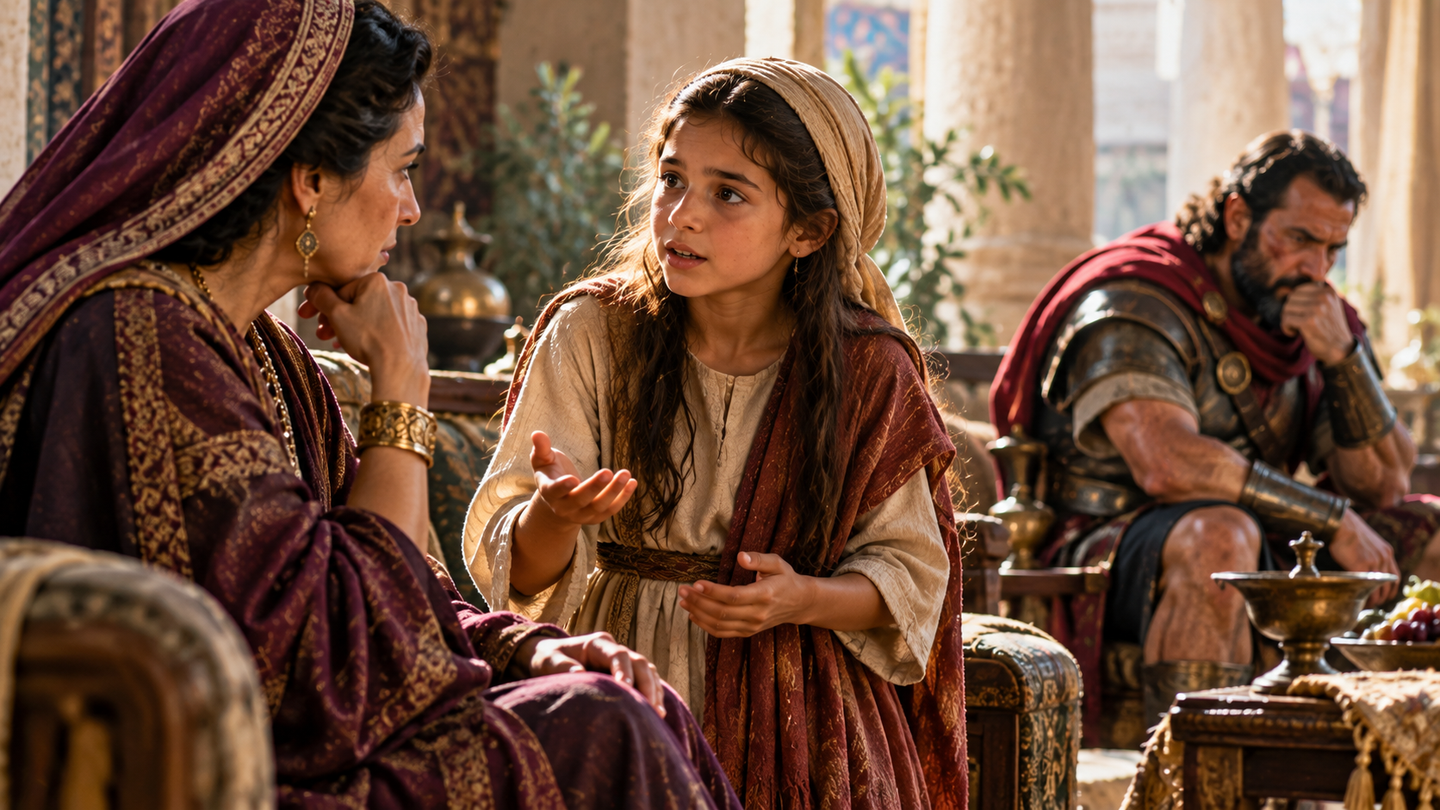
We don't know this young woman's name. We don't know how old she was, although Scripture refers to her as a young girl. We don't know anything about her family, and we never hear from her again. Yet a few words from this unnamed servant girl started a chain of events that resulted in the healing of one of the most important military leaders of her day.
TAKEN CAPTIVE
The story begins by introducing us to Naaman:
Now Naaman was commander of the army of the king of Aram. He was a great man in the sight of his master and highly regarded, because through him the Lord had given victory to Aram. He was a valiant soldier, but he had leprosy. Now bands of raiders from Aram had gone out and had taken captive a young girl from Israel, and she served Naaman’s wife (2 Kings 5:1–2).
Notice the contrast. Naaman was important, powerful, respected, and successful. The young girl was none of those things. She was a captive in a foreign land, serving in the household of the commander of the army whose people had taken her from her homeland.
If anyone had an excuse for putting her purpose on hold, she did. She could have concluded, When I get back home, then I can serve God. When I am free, then I can make a difference. When I have some authority, then perhaps someone will listen to me. Yet purpose doesn't always wait for ideal circumstances, and neither did she.
That's an important lesson for you and me. We often think purpose requires the right title, the right connections, enough money, a supportive environment, or someone to give us permission. This young woman had none of those things, yet she still had something to give.
SHE KNEW SOMETHING
Naaman had a problem that all his power couldn't solve. He had leprosy, and this young servant girl knew something he apparently didn't know:
She said to her mistress, “If only my master would see the prophet who is in Samaria! He would cure him of his leprosy” (2 Kings 5:3).
That's all she said. She didn't heal Naaman. She didn't preach a sermon. She didn't arrange a meeting with Elisha, and she didn't accompany Naaman to Israel. She simply knew where help could be found and spoke up.
I’ve often said that your purpose isn’t what you can do for yourself, but what you can do for others. Sometimes what you can do for others seems so ordinary to you that you don't recognize its importance. You know something, understand something, see something, or can do something that another person needs. Because it comes naturally to you, however, you may assume everyone knows or can do it.
This servant girl knew something the commander of an army didn't know. He had rank, influence, wealth, and access to a king, but she had information he needed. Never underestimate what God has deposited in you simply because someone else has more education, money, influence, or authority than you do.
SHE SPOKE UP
There was another step this young woman had to take. It wasn't enough for her to know there was a prophet in Israel who could help Naaman. She had to say something.
That required courage. She was a servant speaking to her mistress about her powerful husband. She had no guarantee anyone would listen, but apparently there was something about her or the confidence with which she spoke that caused her words to be taken seriously. Naaman heard about what she had said, the king of Aram became involved, and before long Naaman was on his way to Israel.
Think about that for a moment. An international journey involving kings, military officers, servants, gifts, and the prophet Elisha began because one unnamed young woman opened her mouth.
Perhaps you have been waiting for a larger platform before you express your purpose. You may be thinking you need a book, a title, a ministry, a business, a degree, or an audience before what you have can make a difference. This girl had none of those things. She had one listener, one piece of information, and one opportunity to speak. That was enough for God to use.
WHAT ABOUT HER PAIN?
There’s another part of this story that I find remarkable. This young woman had been taken captive by Aramean raiders, yet when the commander of the Aramean army was suffering, she wanted him to get well.
She could have remained silent. She could even have thought that Naaman deserved his suffering because of what his people had done to her. The text doesn't tell us how she processed her captivity or whether Naaman himself had anything to do with it, so we shouldn't add details that aren't there. What we do know is that when she learned of his need, she pointed him toward help.
Purpose sometimes requires you to serve people you would not have chosen to serve. Your gift isn't only for those who appreciate you, agree with you, look like you, or have treated you well. If God has given you something that can help others, then your purpose is to make it available as He provides the opportunity.
This young woman couldn’t control what had happened to her, but she could control what she did with what she knew. Her captivity limited her freedom, but it didn’t eliminate her usefulness.
DON'T WAIT
Naaman eventually went to Elisha, reluctantly followed the prophet's instructions to wash seven times in the Jordan, and was healed. The servant girl disappears from the story after verse three, but everything that followed can be traced back to what she said.
That's often how purpose works. You may start something you don't get to finish. You may give someone an idea and never see what they do with it. You may teach, encourage, advise, create, connect, or speak one sentence that sets something in motion far beyond your ability to follow it. Your responsibility isn't to control the outcome but to give what you have when the opportunity comes.
So don't wait for perfect circumstances. Don't wait until everyone knows your name or recognizes your gift. Don't assume that because you’re in an unpleasant situation, your purpose has somehow been suspended. Ask yourself instead, What do I know? What do I have? Who needs it? And what can I say or do today that could help?
Naaman's servant girl had no title, no freedom, and no recorded name, but she knew what to do when someone had a need. She spoke up, and a powerful man's life was changed because she did.
Purpose Principle: Your circumstances don't cancel your purpose. Use what you know, where you are, for whoever needs it, and trust God with what happens next.