
Monday Memo 1280: The Story I Almost Skipped
Tamar — Genesis 38:6–30
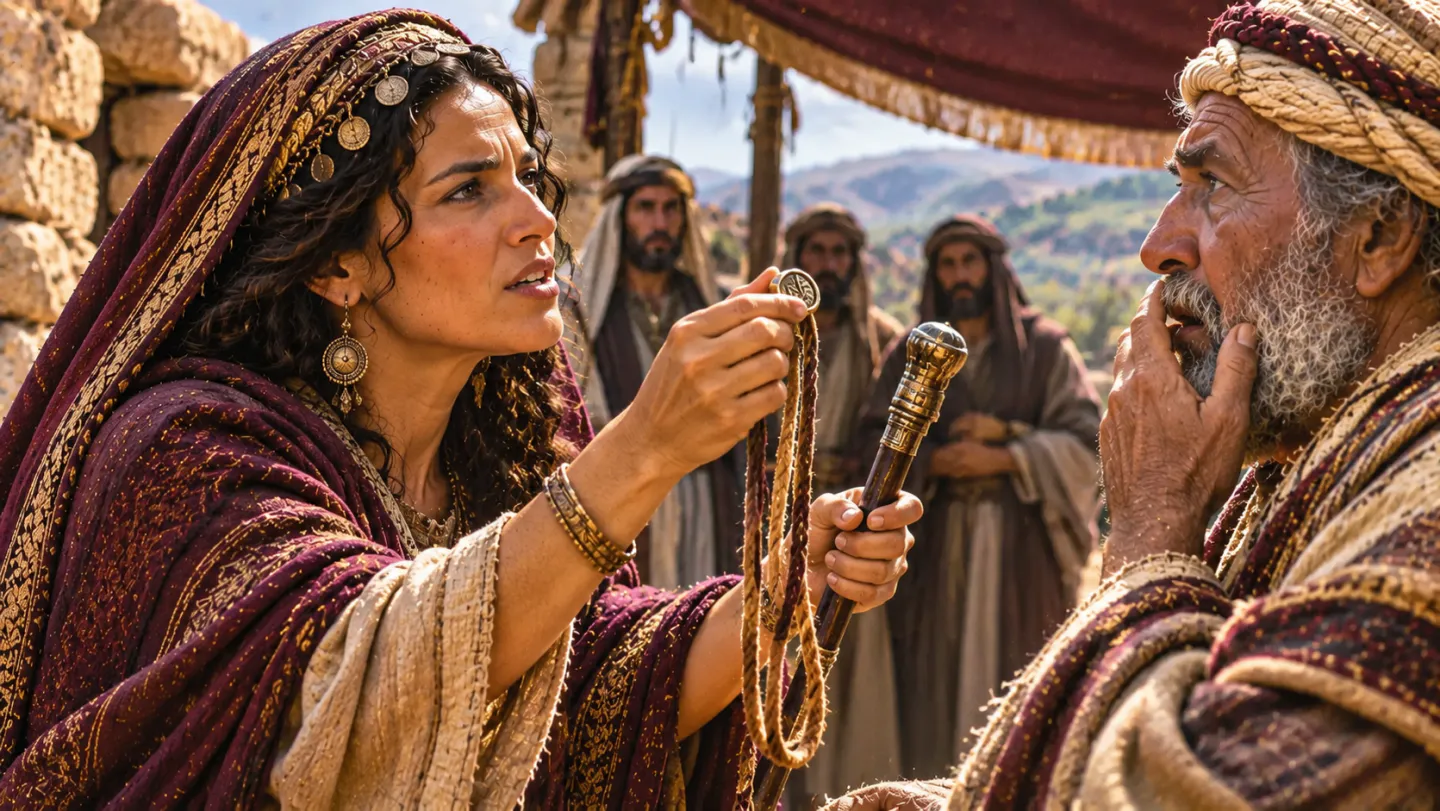 As we continue our Power of Purple series on women of purpose in Scripture, I must confess that I almost skipped the woman we're going to examine this week. Her story is so unusual, and some of her actions so troubling, that I wondered whether readers would be offended by my including her. After all, this is supposed to be a series about women of purpose, and Tamar's story isn't exactly the kind of inspirational account we usually associate with that subject.
But then I reminded myself that this story is in the Word of God, and He placed it there for a reason. If God wasn't hesitant to include Tamar in Scripture, why should I be afraid to examine her life? Perhaps the very things that make us uncomfortable about her story are the things we need to consider most carefully. And perhaps there are some redemptive lessons here that we would miss if we simply turned the page.
A BIZARRE STORY
Tamar married Judah's oldest son, Er, who died because of his wickedness. According to the custom of the time, Judah's second son, Onan, was supposed to provide an heir for his deceased brother through Tamar. Onan refused to fulfill that responsibility, and he also died under God's judgment. Judah then promised Tamar that she could marry his youngest son, Shelah, when he grew older, but Judah never followed through.
Tamar was left in a difficult position, twice widowed and denied the family future she had been promised. Eventually, she disguised herself as a prostitute and positioned herself where Judah would encounter her. Not recognizing his daughter-in-law, Judah had sexual relations with her, and she became pregnant. When Judah learned of her pregnancy, he ordered her execution, unaware that he himself was the father.
Tamar had wisely kept Judah's seal, cord, and staff as a pledge for payment. When she produced them as evidence, Judah recognized his own responsibility and declared, “She is more righteous than I, since I wouldn't give her to my son Shelah” (Genesis 38:26). Tamar subsequently gave birth to twins, Perez and Zerah.
What are we supposed to do with a story like that? I certainly wouldn't recommend Tamar's methods as a model for resolving family disputes! Yet the Bible doesn't hide this account or pretend that the people involved behaved admirably. Instead, it invites us to look beyond the scandal and consider what God was accomplishing.
LOOK BEYOND THE SCANDAL
One lesson is that we should be careful not to judge someone's actions without understanding the circumstances that preceded them. Judah was quick to condemn Tamar while ignoring his own failure to fulfill his promise. He had the power to address her situation but had chosen not to do so. When confronted with the truth, he finally acknowledged that she had been treated unjustly.
There's also an important lesson about purpose. Sometimes people become so discouraged by what others have done to them that they surrender their future. They conclude that because someone broke a promise, denied them an opportunity, or treated them unfairly, their purpose is no longer possible. Tamar refused to accept that her future had to be determined entirely by Judah's failure.
I've had my share of disappointments and painful experiences with people in the church, especially leaders. I could have chosen bitterness or resentment as my response, or I could have backed away from ministering to God's people because of the failures and betrayals of some. Instead, I chose to learn from those painful experiences and allow them to shape my own leadership philosophy. I determined, by God's grace, not to repeat the behaviors of others that had caused me so much pain. In that way, their failures actually helped shape how I would fulfill my own purpose. As for their missteps, I'll leave it to God to sort those out.
I'm not suggesting that we imitate her deception. Rather, I want us to recognize that someone else's failure doesn't have to become the final word concerning our future. God can still work in circumstances that are far from ideal, including situations where people have made serious mistakes.
GOD WASN'T FINISHED
Here's what makes Tamar's story remarkable. Centuries later, Matthew included her in the genealogy of Jesus, writing that Judah was the father of Perez and Zerah, whose mother was Tamar (Matthew 1:3). The woman whose story seems almost too embarrassing to discuss became part of the family line through which the Messiah came.
Think about that. Tamar couldn't have known the significance her life would have for future generations. She was dealing with an immediate crisis involving her family and future, but God was working through that complicated situation in ways she couldn't possibly have imagined.
That's encouraging news for anyone whose life hasn't followed the path they expected. Perhaps you've experienced betrayal, injustice, disappointment, or consequences from decisions you wish you could change. You may even be embarrassed by portions of your story and wonder whether God can still use you. Tamar reminds us that God's redemptive purposes are greater than the failures and complications of our personal histories.
DON'T SKIP YOUR STORY
I find it interesting that Matthew didn't leave Tamar's name out of Jesus' genealogy. He could have simply mentioned Judah and Perez, but instead he specifically identified Tamar as Perez's mother. Her story, with all its uncomfortable details, was not erased from the record.
Perhaps that's the most important lesson we can learn from this unusual woman of purpose. God doesn't need a perfect history to accomplish His purposes through our lives. He can redeem what seems hopeless, bring good out of painful circumstances, and give significance to events we would never have chosen.
So don't allow the difficult chapters of your life to convince you that your purpose has ended. You may not understand everything that has happened, and you certainly can't change the past, but you can continue to move forward with God. Your story isn't over simply because some of its chapters are difficult to read.
Purpose Principle: Your past, the failures of others, and the complicated circumstances of your life do not have to determine your future. God can redeem difficult situations and give your life significance far beyond what you can presently see.